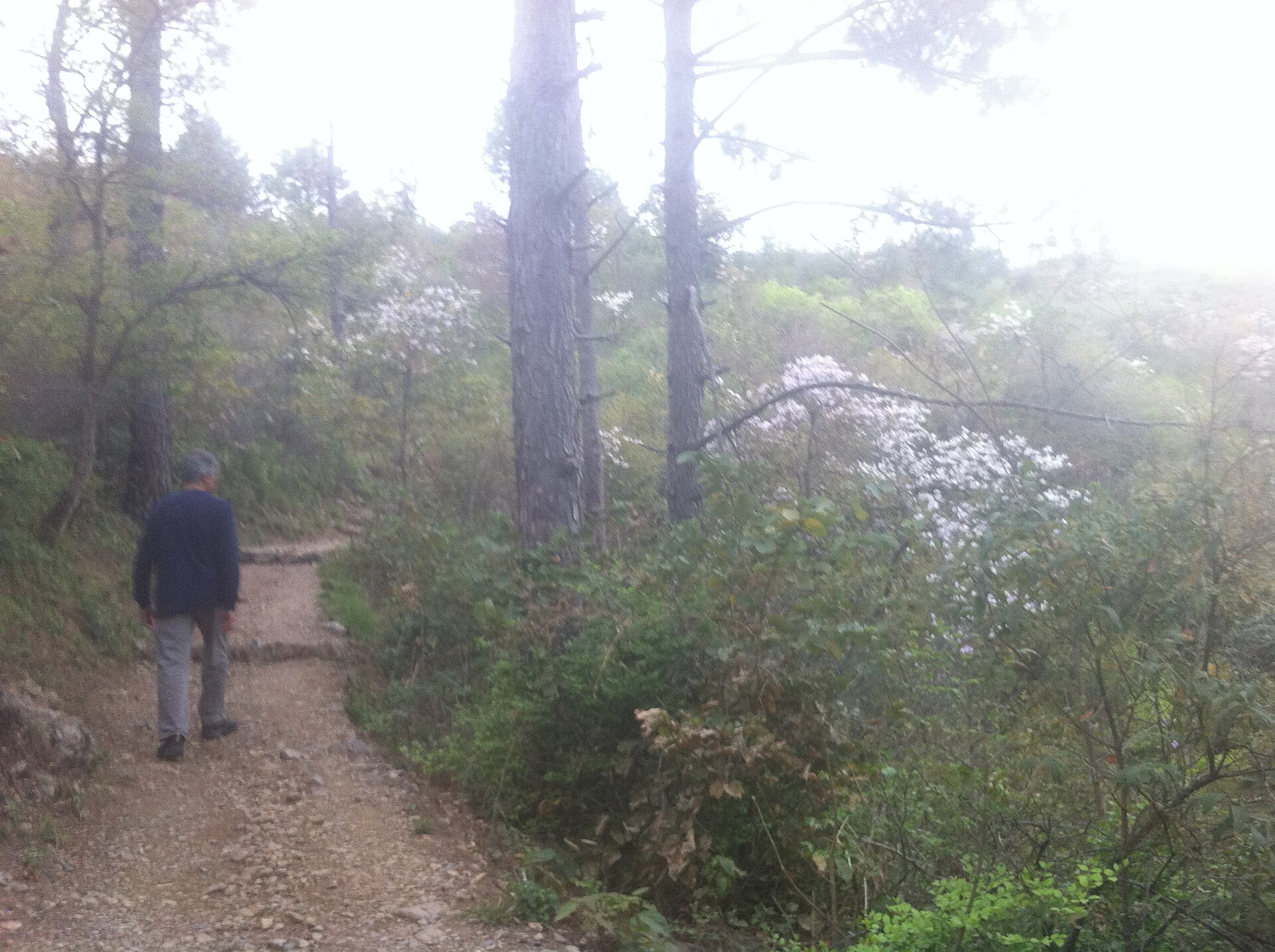
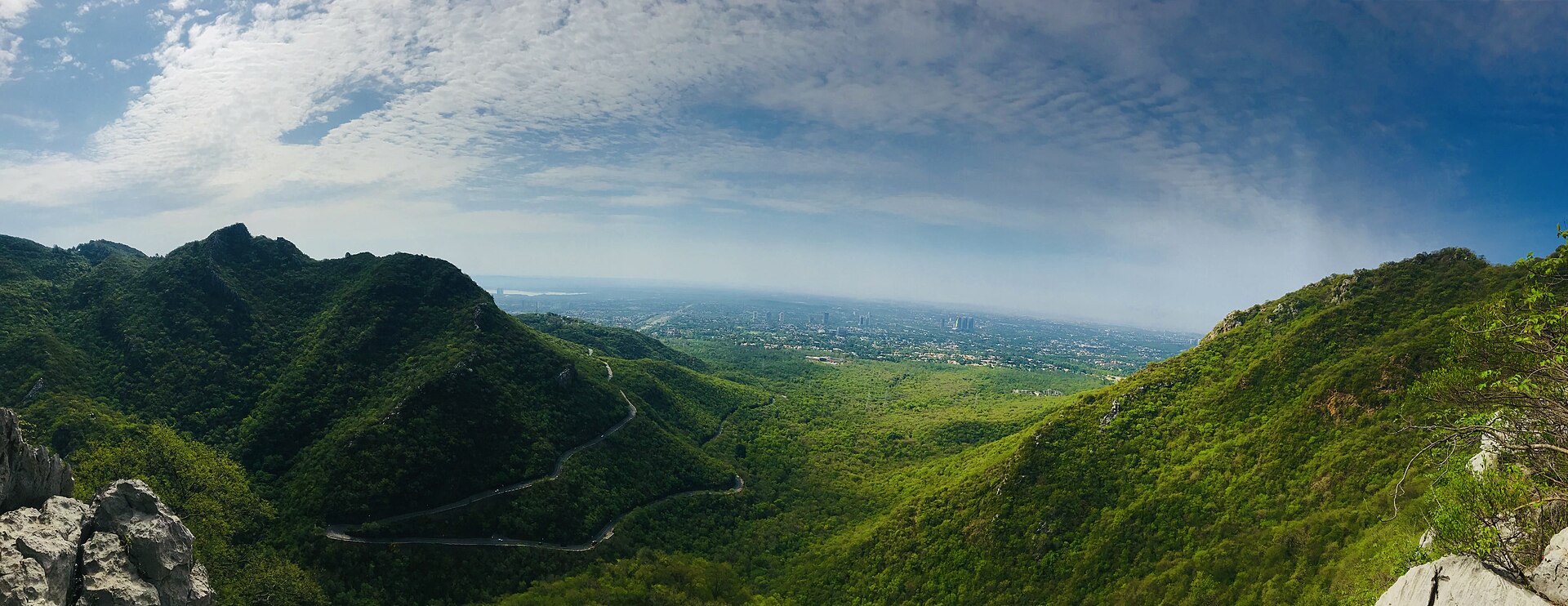
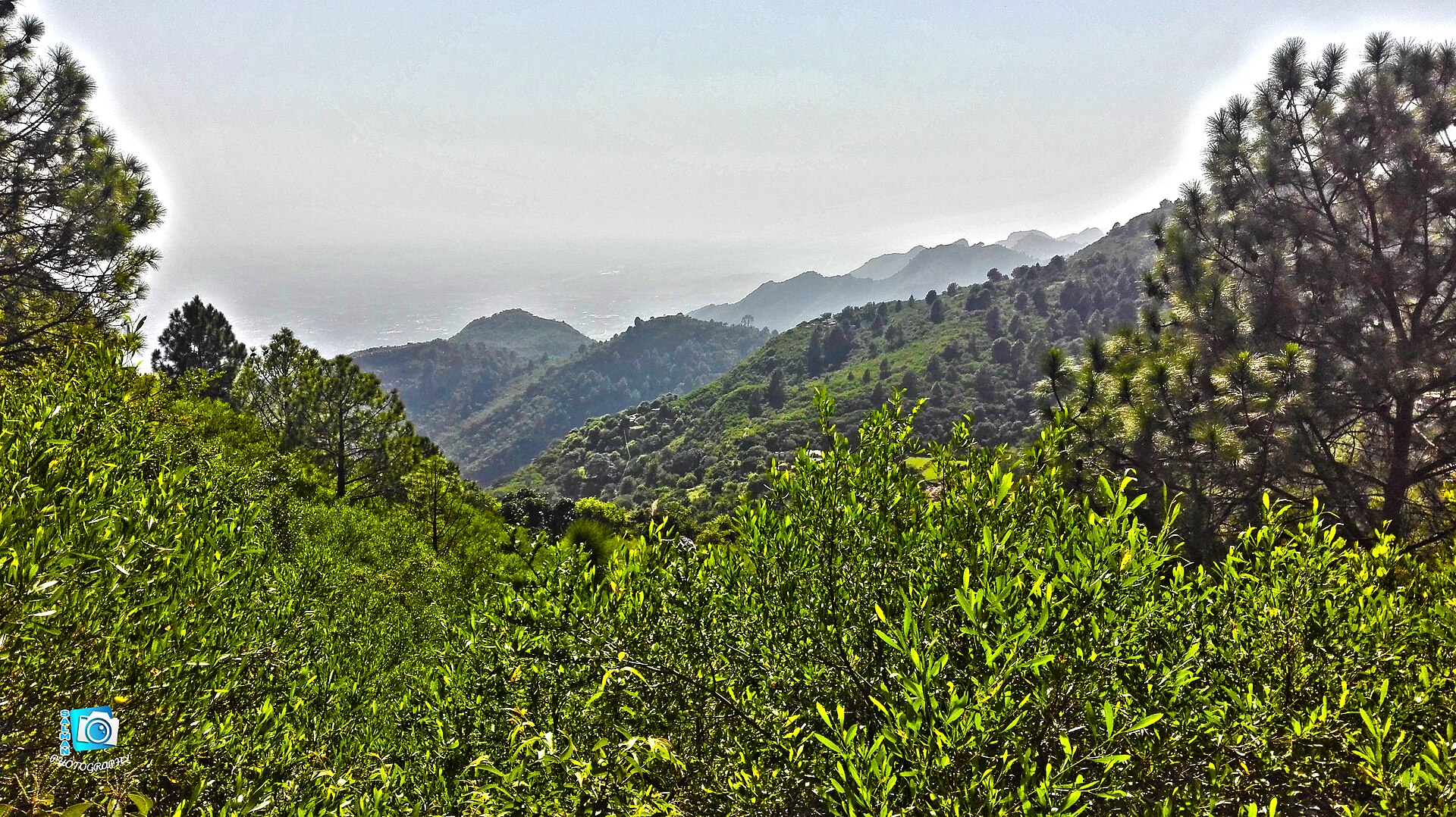
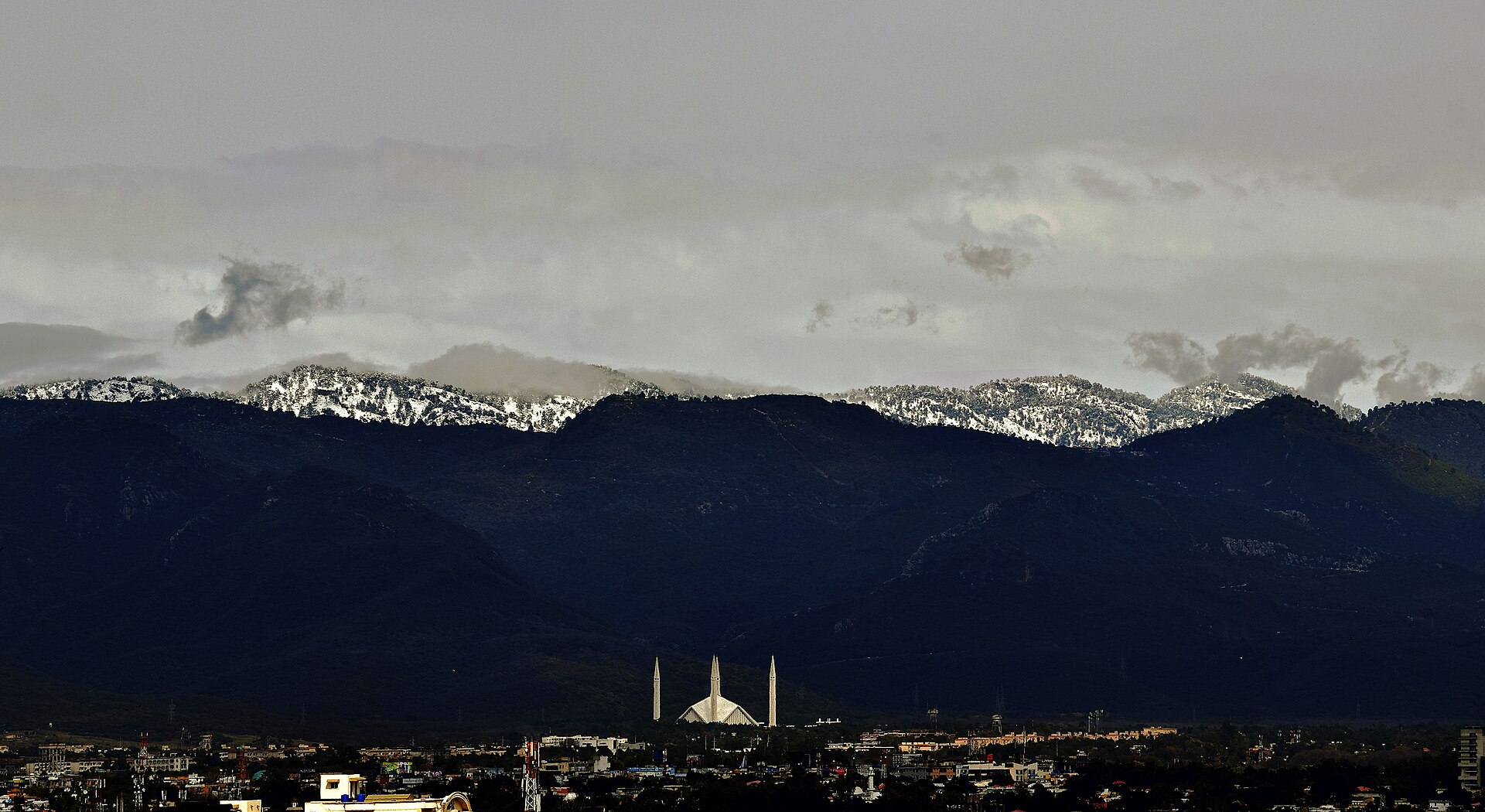
The Margallah hill range offers excellent opportunities for short and long hikes with magnificent vistas opening up on all sides. A network of trails having more than 120 km total length has been developed. Important trails are marked. Listed below are some of the popular trails and are recommended for pleasant hiking and enjoyment of nature.
Trek # 1 A, 1 B: A moderate climb of about 5 kms starting from Sanjari and rising to the ridge at Sanduri where there is a water spring. You may continue walk on the ridge or descend in Kalinjar or Bali Mah Valleys via trails 1 and 1 B.
Trek # 2: It starts from the right gate of the zoo, and joins Trek # 2-A after about 10 minutes walk.
Trek # 2-A: It starts about from the zoo near the Daman-e-Koh road. It bifurcates after about 20 meters. The right hand side is trek # 2-A, while the left hand side is trek # 2-B. Trek # 2-A ascends for about 1 kilometer and finishes at the car park at Daman-e-Koh.
Trek # 2-B: This trek is about 4 km long and touches the Daman-e-Koh road about 400m short of the tea-stall.
Trek # 2-C: This walk branches from trek #2 on the right covering 200 meters and ends at Forest hut at Daman-e-Koh.
Trek # 2-D: Beginning near the tea stall, this trek ascends to a good view point for Rawalpindi and Islamabad on the southern side and the Dhok Jiwan valley and ridges on the northern side. It is about 20 minutes climb.
Trek # 3: It starts at the north east end of sector F-6. It is 7 km climb to Chowki on Pir Sohawa road located on the crest.
Trek # 4-A Dhoke Jiwan Trek: It starts from the spring in the valley below the 1st sharp turn on the road to Daman-e-Koh. It bifurcates soon after the start. The left trek, after about 7 km joins up with Trek # 4-B. From this point Trek # 4 starts. This trek leads to Gojri Bari, and finally to Pir Sohawa road.
Trek # 4-B or Faisal Mosque Trek: This offers moderate climbing, and is 5 kms long. It ascends from an altitude of 609m (2,000 ft.) above sea level to 914m (3,000 ft.) at Chak Jabi, where it joins with trek #4A near Pir Sohawa road.
Trek # 4-C: It starts from the spring on right hand side of trek # 4-B. After about 3 km climbing it touches Pir Sohawa road at Bodla Bun. However, there is an offshoot at a place called Chashma Ranjha, which crosses the stream bed and touches Trek # 4-A near Chaklab. This offshoot is about 2km long.
Trek # 8: This trek starts from Mandial Water Works and ascends rather steep for about 3kms and then it is relatively easy walk to Pir Sohawa Rest House which is at 113m (3850 ft.) Total distance is about 7 kms from start to finish.
Trek # 9: Also starts from Mandial Water Works and goes up to Pir Sohawa Rest House, running along the stream bed. It is a rather narrow path involving a relatively difficult climb most of the way passing along a 25 ft. waterfall called 'Bruti Spring Fall'.
Trek # 10: This trek starts from Quaid-e-Azam University, elevation of 670m (2,200 ft.). It is narrow metalled road winding rather steeply up to Rumli and Narias villages, and road to Pharilla at an elevation of 1173m (3850 ft.). It is roughly 8.5 km.
Trek # 10-A: This path is an offshoot of Trek #4 at about 2 km short of village Narias on the left hand side. You reach Pir Sohawa after about 5 km.
Trek # 11: This climb is a metalled narrow road, about 5 km long starting from the same place as Trek # 10. Beyond Rumli at village 'Sangra Ziarat' it turns to Shahdra valley, and connects with the road which meets Murree road between Mallpur and Bhara Kahu.
Trek # 12: This is a 7 km long trek involving some difficult climbing. It starts from Shahdra and ends at Pharilla.
JOGGING PATH
This path starts from near the Marguzar Zoo and goes westwards, passing by Kalinjar, and culminating at Chauntra.
FLORA
Margallah Hills represent a contact zone between two important bio-ecological regions, the Great Indo-Himalayan ecosystem and the arid Irano-Saharan ecosystem. Ranges of several plant and animal species of both the bio-regions overlap here and, as Margallah presents rich and diverse flora and fauna.
Natural vegetation in the park is in an early stage, recovering since the early 1960's and is represented by 104 families, 405 genera and 610 species. Two distinct vegetation layers are visible. The flora on the northern slopes and above 1000 m is subtropical pine zone, dominated by Chir pine (Pinus roxburghii), associated by Oak trees (Quercus incana).
Undergrowth mainly consists of "Kohal" (Myrine afrieana) and "Babering" (Berberis lycium), frequently associated with "Garanda" (Carissa opaca) and a number of other shrubs and herbs.
On southern slopes and below 1000 m is the subtropical mixed evergreen and deciduous forest with rich floral diversity. "Phulai" (Acacia modesta) and "Kao" (Olea ferruginea) are dominant tree species associated by a number of others like "Kachnar" (Bauhinia variegata), Amaltas (Cassia fistula), Sakar Ehtrea laevis, Shamshad (Buxus papilosa), Kangar (Pistacia chinensis), Kamila (Mallotus philippensis), Amla (Phyllanthus emblica), Khair (Acacia catechu), Dhak (Butea monosperma), Bakar (Celtis australis), Dhaman (Grewia optiva), Kuml (Iana grandis). The associated shrubs and herbs are numerous due to which the valleys and hills are thickly covered. Because of the large variety of flowering trees and shrubs, colour and fragrance prevails in Margallah almost throughout the year. Some of the splendid blossom trees and shrubs of various seasons are given below:
Margalla Hills National Park protects a varied wildlife community in the foothills of the Himalayas.
Woodland, scrub, rocky slopes, ravines and watercourses provide different habitats for animals and birds.
The Islamabad Wildlife Management Board documents a varied community of mammals, birds, reptiles and amphibians in the park.
The common leopard is among the park’s most important and elusive large carnivores.
A 2026 peer-reviewed camera-trap study found seasonal differences in leopard detections and habitat use, with prey availability and distance from settlements among the important factors.
Leopards are difficult to observe and should never be approached, followed or baited by visitors.
Mammals reported from the park include barking deer, wild boar, rhesus monkeys, porcupines, pangolins and other species.
These mammals contribute to the ecosystem as herbivores, omnivores, insect-eaters or prey for larger carnivores.
The park supports resident and migratory birds, making it valuable for birdwatching and ecological monitoring.
Birds of prey help regulate animal populations, while many other birds disperse seeds or feed on insects.
Seasonal movements mean that the birds visible in the park can vary through the year.
Reptiles, including lizards and snakes, occupy a range of habitats and play roles in local food webs.
Amphibians depend on suitable moisture and breeding conditions, particularly around appropriate water sources.
Butterflies and other insects are important components of biodiversity and can contribute to pollination.
Plants provide food, cover, nesting sites and shelter for many kinds of wildlife.
The survival of individual species therefore depends on the condition and connectivity of the wider habitat.
Forest fires can destroy vegetation, nests and shelter, while habitat degradation reduces resources available to wildlife.
Litter, noise, feeding, chasing animals, illegal hunting and other disturbances can place additional pressure on wildlife.
Visitors should keep a safe distance, never feed wild animals, carry out their rubbish and remain on permitted trails.
There are 38 species of mammals in the Park. Goral is a resident goat found on vertical rocky slopes. It blends in perfectly with the rocks and is not detected easily. The best time to look for Goral is around sunrise and sunset on cliffs near Daman-e-Koh. Jungle cats are visible and may be seen crossing a road or a path. Palm Civets may be seen in pairs or in family parties crossing the roads at night. Barking deer is often heard but seldom seen. However, one may see them crossing a clear trail at dawn or dusk if luck holds good. Leopards prowl the slopes and the valleys usually in winter when they come down from higher ranges in search of prey which includes barking deer, goral, wild boar and monkeys and on occasion domestic livestock. Rhesus monkeys are always found in large groups stretching up the slopes.
Birds:
The Margallah Hills are rich in birds, both their species and their number. These include sedentary and migratory species. Best time for bird watching is at sunrise and about an hour after that, and again in the evening about at noon before sunset.
Partridges, Chakors, Song birds and Kali pheasant are common in the park. Cheer Pheasant which had become extinct in past has been re-introduced. Cheer are reared at Jabri Pheasants for re-introduction in the Park. A large variety of birds also breed in the Park during springtime. This is a time when the Margallahs become a festival of bird songs. In winter, the park is full of high altitude species from the Himalayas and northern mountains. Huge raptors to tiny finches and warblers all add to the charm of this nature preserve.
Reptiles:
This Park is also of interest to a student of herpetology. Reptiles species that one may commonly come across in summer are garden lizard which change colour, small lizard with rust colour lines, a tiny harmless snake which looks like an earthworm, called Typhlops. Brown rat snakes are also found here. Other snakes in the park include the Royal snake and the Checkered keelback. Among poisonous ones are the Viper, Cobra and Krait.
Butterflies:
There is rich diversity of invertebrates in the Park. A variety of butterflies emerge in spring. These include large Cabbage White, Clouded Yellow, Brimstone, Common Tiger, Painted Lady, Swallow Tail, Lemon, Mottled Emigrant, Grass Yellow, Great egg fly, Peacock Lime and many others.
RAWAL lake ...
This beautiful lake is an integral part of the Margallah Hills National Park. Its area, including 2 km perimeter buffer zone is 1902 hectares. This artificial lake was created in 1962 by damming the small Korang river, mainly to provide additional drinking water to the Rawalpindi city. It was also developed as a popular picnic, angling and water sports spot. Gradually the biodiversity of the lake and the surrounding vegetation increased significantly.
It has become an important foraging water fowl and the Himalayan altitude birds. Interesting mammals like Pangolins, fruit bats, porcupines and others are found here.
View points and picnic spots:
C.D.A. has constructed many view points and picnic spots in the Margallah hills. Some of these give view of Islamabad and Rawalpindi to the south. Others which are on the northern slopes face the parallel Makhnial hill range, and the valley of these ranges with a clear water stream called “Nil Kassi”. Some view points and picnic spots are on the top of the mountain, most above 3300 m or 3700 ft. elevation, giving wide view all around. All the spots are connected with Pir Sohawa road.
Daman-e-Koh is the most prominent amongst these and most popular. It has two car parks, a tea-stall, a restaurant, public toilets, lawns and several places for the wide view down below.
Rest houses:
The directorate of Horticulture, C.D.A. has three lodges in the Hill range. One is at Daman-e-Koh, the second one is at Pir Sohawa and the third one is at Pharilla. The first two have electricity facility.
Let's Take a Hike
Instituted in 1980, the Margallah Hills National Park comprises of the Margallah Range (12605 ha), the Rawal Lake, and Shakarparian Sports and Cultural Complex. The hill range nestles between an elevation of 685 meters at the western end and 1,604 meters on its east. The rock formations are 40 million years old, and fossils of marine life abound everywhere, bearing eloquent testimony that the Margallah Hills were at one time under the sea.
The vegetation of the southern slopes is short-statured, comprising deciduous and evergreen trees with diverse shrub growth. In the north stand Pines and groves of Oak. The fauna is mainly Indo-Himalayan, with some overlapping of Palearctic species. The birds found here are residents as well as winter migrants from higher altitudes of the North. Spring and summer visitors come for breeding, and short-day transit species arrive in spring.
Climate
Climate of Margallah is generally sub-tropical with five distinct seasons: Winter, Spring, Summer, Monsoon and Autumn. Annual rainfall averages about 1000 mm, most of which is received during monsoon (July–September). Light rain is received during winter months while summer and autumn are fairly dry. Maximum and minimum temperature average between 38.7°C and 0°C during the year. May–June being the hottest and December–January the coldest months. Mean relative humidity varies with the temperature and rains; up to 80% during monsoon and winter, and below 50% during summer. All seasons here have their particular charm; spring perhaps slightly more than others.
Geology
The Margallah comprises of shale and limestone rock formations. The limestone rock is rich in Foraminifera marine fossils. Tiny fossils can be seen embedded in the rocks studied with a hand lens for structural details by advanced enthusiasts. Most of these rocks were formed during Paleocene and Eocene periods, about 40–60 million years ago. At some places, rocks from Cretaceous period (65–140 million years ago) lie exposed on the surface.
Culture Resources
Islamabad occupies the area of Paleolithic sites, which also includes Dhoke Juri Caves near the southern park boundary, west of Shah Allah Ditta village. The magnificent archeological sites in the Taxila valley are adjacent to the Park's north western boundary. Here several archeological ruins date back in time to the Paleolithic and the Neolithic. The associated sites in the Park include a cobbled path and an ancient well on the "Kukka Dara Khoh", pass north of Shah Allah Ditta village. There is a Hindu Priest's garden called "Sadhu da Bagh", near Shah Allah Ditta. Located here is also a shrine of Bari Shah Imam built on top of medieval sites. The villages of Nurpur and Saidpur are also of medieval times, dating back to some 450 years. The "Julian ruins" lie adjacent to the Park. The 500 years old famous cobbled Grand Trunk Road built by Sher Shah Suri goes through the Margallah pass, immediately west of Nicholson monument.
Old Human Settlements
The villages of Shah Allah Ditta, Gokina, Talhar and Saidpur are some of the oldest human habitations of the area.